
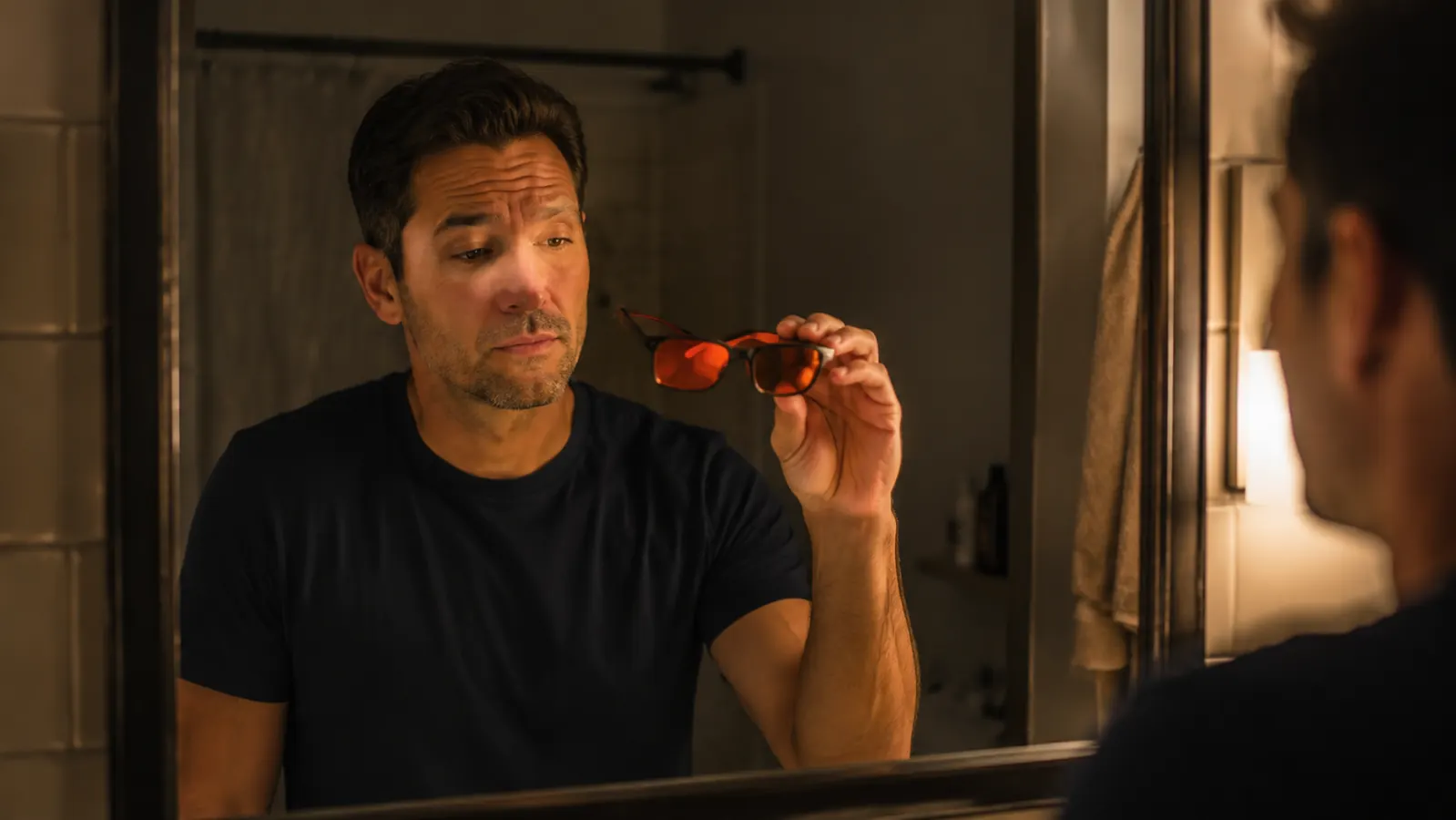
For about two years, every time an ad for blue light glasses showed up in my feed, I scrolled right past it and mentally filed it under snake oil for people who'd rather buy a gadget than fix their actual habits. Then my wife Casey came home from a coworker's baby shower talking about how the coworker's husband swore by his TIJN sleep glasses, and I made the mistake of saying out loud that it sounded like a scam. She bought me a pair for my birthday two weeks later, mostly to prove a point. This review is what happened after I actually had to eat my words and put them on every night for two months.
I want to be upfront about the bias I walked in with, because I think most reviews skip that part. I didn't test these hoping they'd work. I tested them half expecting to write a review confirming my suspicion that red-tinted glasses were a placebo dressed up as science. TIJN's version has a deep red or amber lens meant to block blue and green light in the evening, the theory being that less of that light exposure keeps your body's melatonin production on a more normal schedule. That part of the theory is real and reasonably well studied. Whether a fifteen dollar pair of glasses actually delivers enough of that effect to matter is the part I went in doubting.
The Quick Verdict
A skeptic's honest answer: they worked better than I expected, but not for the reason the marketing implies, and there were more awkward moments than any review had warned me about.
Amazon Check Today's Price →I Was Ready to Write These Off as a Gimmick. I Was Wrong About Most of It.
If you're the skeptic in your house rolling your eyes at blue light glasses right now, I get it. Here's the honest version of what changed my mind, downsides included.
Amazon Check Today's Price on Amazon →How I've Used It
I didn't test these the tidy way a lot of reviews describe, wearing them at the exact same time every night in a controlled little routine. My evenings are messier than that. Some nights I put them on right after dinner around 7:30 because Casey and I were catching up on a show. Other nights they didn't go on until 9:45 because I got stuck finishing an email or helping our daughter Emma, who's seven, with a school project that somehow always turns into a bigger production than expected.
I also wore them in situations that felt like a genuine stress test rather than a cozy at-home routine. I wore them on a work Zoom call once by accident, forgetting I still had them on after finishing a bedtime story, and sat there for a full ten seconds before a coworker asked why everything I said looked tinted orange on his screen. I wore them at my in-laws' house over a weekend visit, which meant explaining to my father-in-law what they were and why I looked like I was auditioning for a low-budget vampire movie.
I also deliberately skipped a few nights here and there, not out of laziness but because I wanted to see if I could actually notice the difference between a night with them and a night without, rather than just assuming they worked because I wanted them to. Those skipped nights are honestly where I learned the most, and I'll get into what they showed me a little further down.
There was also a stretch in the middle of the two months where Casey traveled for a long weekend to help her sister move, and I was solo with Emma and Jonah every evening. Bedtime got chaotic enough on those nights, baths running late, one lost stuffed animal crisis, that the glasses were sometimes the very last thing I remembered to put on, already lying in bed at 10:15 instead of my usual window. Even on those rushed nights I noticed I still reached for them out of habit, which told me the routine had stuck more than I expected given how disorganized that particular week was.
The Marketing Claims I Wanted to Fact-Check
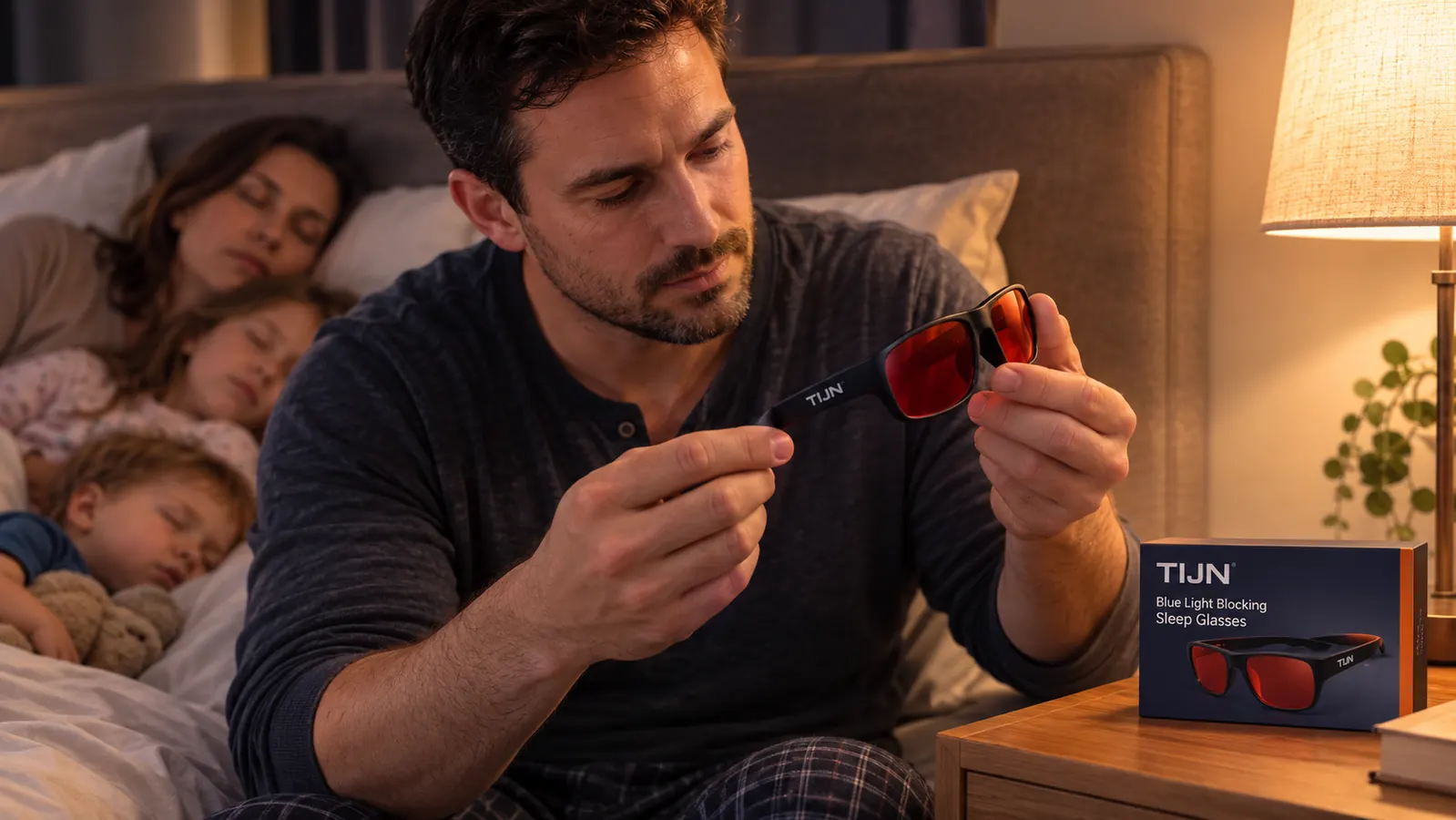
The listing leans on language about blocking blue and green light and protecting your circadian rhythm, which sounds impressive until you go looking for the actual research behind it. What I found isn't a scam, but it's also not the slam dunk the product photos imply. Studies on blue light blocking glasses for sleep show a real but modest effect, and a decent chunk of that effect is tangled up with the fact that people who wear the glasses also tend to be more mindful about winding down in general, since putting on a weird pair of red glasses is a physical reminder that bedtime is coming.
So here's my honest read after living with them: I don't think the glasses are magic, and I don't think TIJN is claiming they are either if you read the actual product description instead of just the headline. What they're doing is giving you a built-in cue, a small physical ritual, on top of whatever real light-blocking benefit the red lens provides. That combination is genuinely useful. It's just not the same story as "these glasses will fix your sleep," which is closer to how a lot of ads frame it.
The nights I skipped wearing them, mentioned above, were revealing here. On two of those nights I still went through the exact same wind-down routine, dim lights, no phone in bed, just without the glasses. I didn't notice a huge difference those specific nights, which told me the ritual and the routine were doing a lot of the work, not just the lens tint by itself. That's not a knock against the product. It's just a more honest explanation than the marketing gives you.
I also spent an evening actually reading through the one-star reviews on Amazon before writing this, since I think the complaints tell you more than the five-star praise does. A handful of buyers said the glasses did nothing for them at all, and reading those, I believed them. Sleep is tangled up with stress, diet, screen habits, and a dozen other things a pair of glasses can't touch. If someone's underlying problem is a stressful job or a newborn waking them every two hours, red lenses in the evening were never going to be the fix, and it would be dishonest of me to imply otherwise just because they worked reasonably well for me.
The Genuinely Awkward Parts Nobody Mentions
Nobody warns you how often you'll catch your own reflection wearing these and have to fight the urge to laugh at yourself. The lenses are a strong, saturated red-orange, closer to safety glasses at a nightclub than anything subtle, and the first time I saw myself in the hallway mirror wearing them I understood immediately why Casey had been smirking the whole time she handed me the box.
Our son Jonah, who's four, thought the glasses were the funniest thing he'd ever seen for about three straight weeks. Every single night when I put them on he'd yell "Daddy's a dragon eyes!" at a volume that undid whatever quiet wind-down mood I was going for. Emma eventually started asking to borrow them just to see the living room look weird, which meant more than a few nights I had to negotiate turns with a seven-year-old over a pair of adult glasses two sizes too big for her face.
There's also the plain social awkwardness of anyone unexpected showing up while you're wearing them. A neighbor stopped by to borrow a ladder one evening around 8:30, and I answered the door still wearing the glasses because I genuinely forgot I had them on. He didn't say anything, but the look on his face told me exactly how strange I looked standing in my own doorway glowing faintly red. If you're someone who cares what casual visitors think, that's a real cost worth knowing about going in, not just a joke in a review.
The other awkward moment worth admitting happened on a video call with my own mother, who asked with real concern in her voice whether something was wrong with my eyes. I had to explain, on camera, in front of Casey who was doing absolutely nothing to hide her laughter in the background, that I was wearing sleep glasses on purpose. My mother was not fully convinced this was a real product and not something I'd made up to avoid admitting I'd been crying, which is its own special kind of conversation to have with your mom at thirty-something years old.

What Surprised Me, Good and Bad
The good surprise was how quickly the ritual effect kicked in, faster than I expected given how skeptical I'd been. By about the tenth night, putting the glasses on had become a genuine signal to my own brain that the day was winding down, independent of whether the tint itself was doing anything measurable. That's not nothing. A cheap object that reliably tells your nervous system "we're done for the day" has real value even if the mechanism is partly psychological.
The bad surprise was how much they messed with my depth perception the first several nights, more than any review I'd read before buying prepared me for. Everything through the red lens loses a lot of contrast, and walking down our stairs to grab a glass of water felt genuinely disorienting for close to two weeks. I never fell, but I definitely gripped the handrail more than usual and moved slower through the house than I'd like to admit for a grown man in his own home.
Another surprise, a smaller one, was how much the lens color affected my mood watching TV with Casey. Shows that lean on blue and green cinematography, which is a lot of them, looked genuinely strange and a little flat through the red tint. We ended up picking warmer-toned shows some nights specifically because they held up better with the glasses on, which is a small but real tradeoff nobody mentions when they're only talking about sleep benefits.
I also didn't expect how much the glasses would change my relationship with my phone specifically, more than with the TV or the lights in the house. Text on my phone screen through the red lens turns into a muddy, low-contrast blur that's genuinely annoying to read, which meant I naturally reached for it less in the last hour before bed, not because I'd developed willpower but because scrolling had simply become more irritating than it was worth. That side effect wasn't in any product description I read, but it might be the single most useful thing that happened over the two months.
How They've Held Up After Two Months
Physically, they've survived better than I expected from something this inexpensive. The hinge on the left arm has loosened just slightly, enough that I notice it when I fold them, but not enough that they've fallen apart or stopped sitting straight on my face. The nose pads show a little wear where they contact my skin every night, a faint shine you can see if you tilt them under a lamp, though it hasn't affected comfort at all.
The lens itself picked up one faint scratch near the bottom edge sometime around week five, most likely from being set down face-first on the nightstand instead of in the case, which is entirely on me and not a defect in the glasses. It's not visible unless you're looking for it and hasn't changed how they work. For something that gets handled nightly by me, occasionally by Jonah, and periodically borrowed by Emma, that's a reasonable amount of wear, not a red flag.
What I Liked
- Built a genuinely useful wind-down ritual faster than I expected, even accounting for my own skepticism
- Held up physically after two months of nightly use plus two kids handling them regularly
- Cheap enough that testing the theory for yourself is a low-risk decision either way
- Comfortable enough to forget you're wearing them once your eyes adjust
Where It Falls Short
- The marketing implies more of a sleep fix than the honest research actually supports
- Genuinely awkward moments with visitors, video calls, and family teasing that no review warned me about
- Noticeable depth perception issues walking around the house for the first couple weeks
- Changes how TV and screens look enough that it affects what you choose to watch together
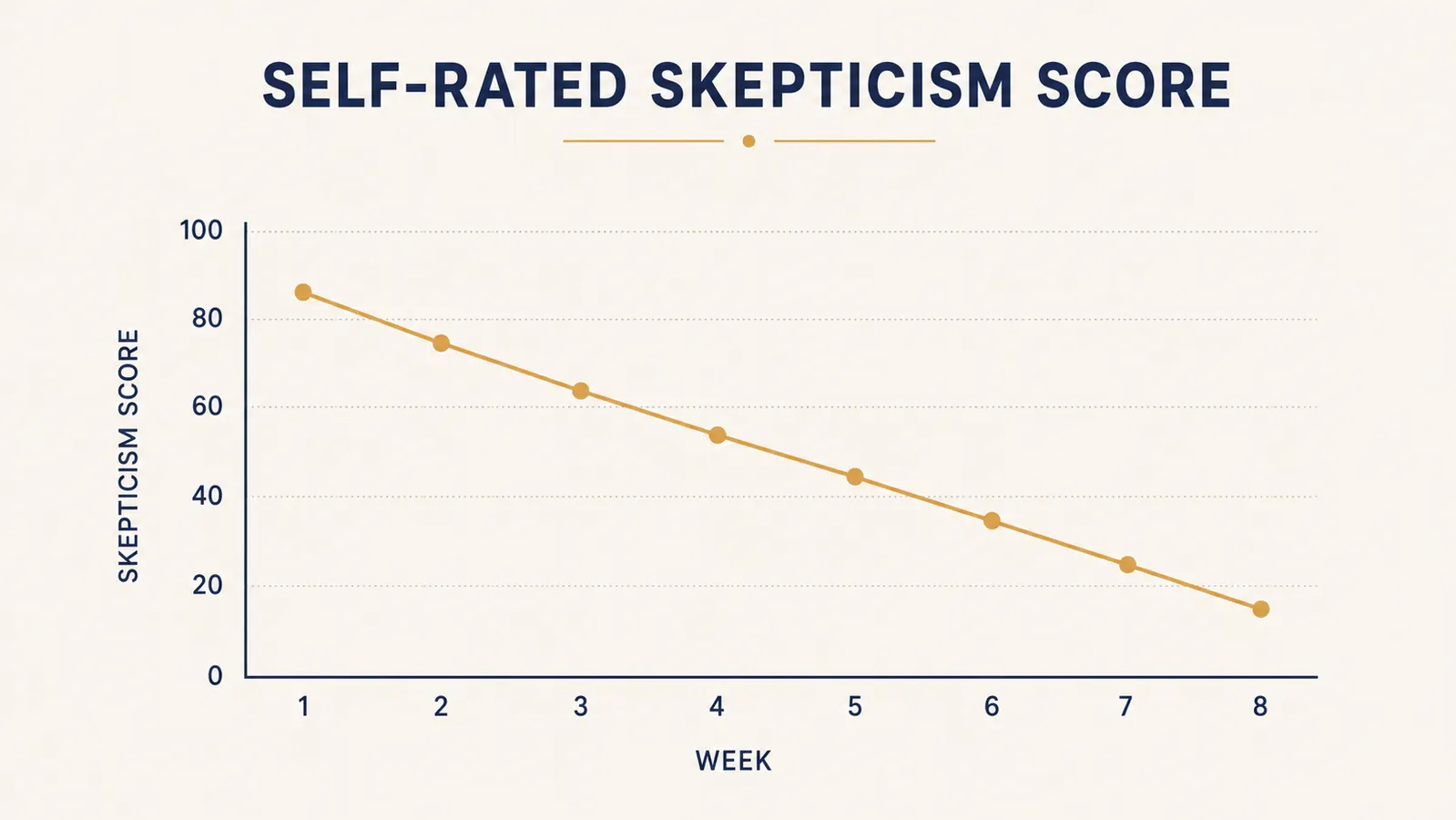
I went in ready to write these off as a gimmick. What actually changed my mind wasn't the lens tint, it was how fast putting them on became my brain's signal that the day was over.
Who This Is For
This makes the most sense for someone like me, a skeptic who wants an honest, low-stakes way to test whether a physical wind-down cue actually helps, without pretending the science is more settled than it is. It's also a solid fit if your house is loud and chaotic in the evenings like ours, since the ritual of putting them on cuts through the noise better than a vague intention to "go to bed earlier" ever did for me. If you're willing to look a little ridiculous in front of your family for a few weeks in exchange for an actual result, that trade was worth it in our house.
Who Should Skip It
Skip these if you're someone who genuinely can't tolerate looking strange in front of houseguests or on video calls, because that awkwardness is real and it will happen more than you expect. They're also not the right fit if you're hoping for a fix that requires zero other changes to your evening habits, since the honest truth is the routine around the glasses matters as much as the lens itself. And if depth perception issues around stairs or a dim house sound like a dealbreaker for you, that adjustment period is worth weighing before you buy.
I Was Wrong About These Being a Gimmick. Find Out for Yourself Before You Decide.
The honest version costs less than you'd think to test, and even a skeptic like me ended up keeping them on the nightstand two months later.
Amazon Check Today's Price on Amazon →