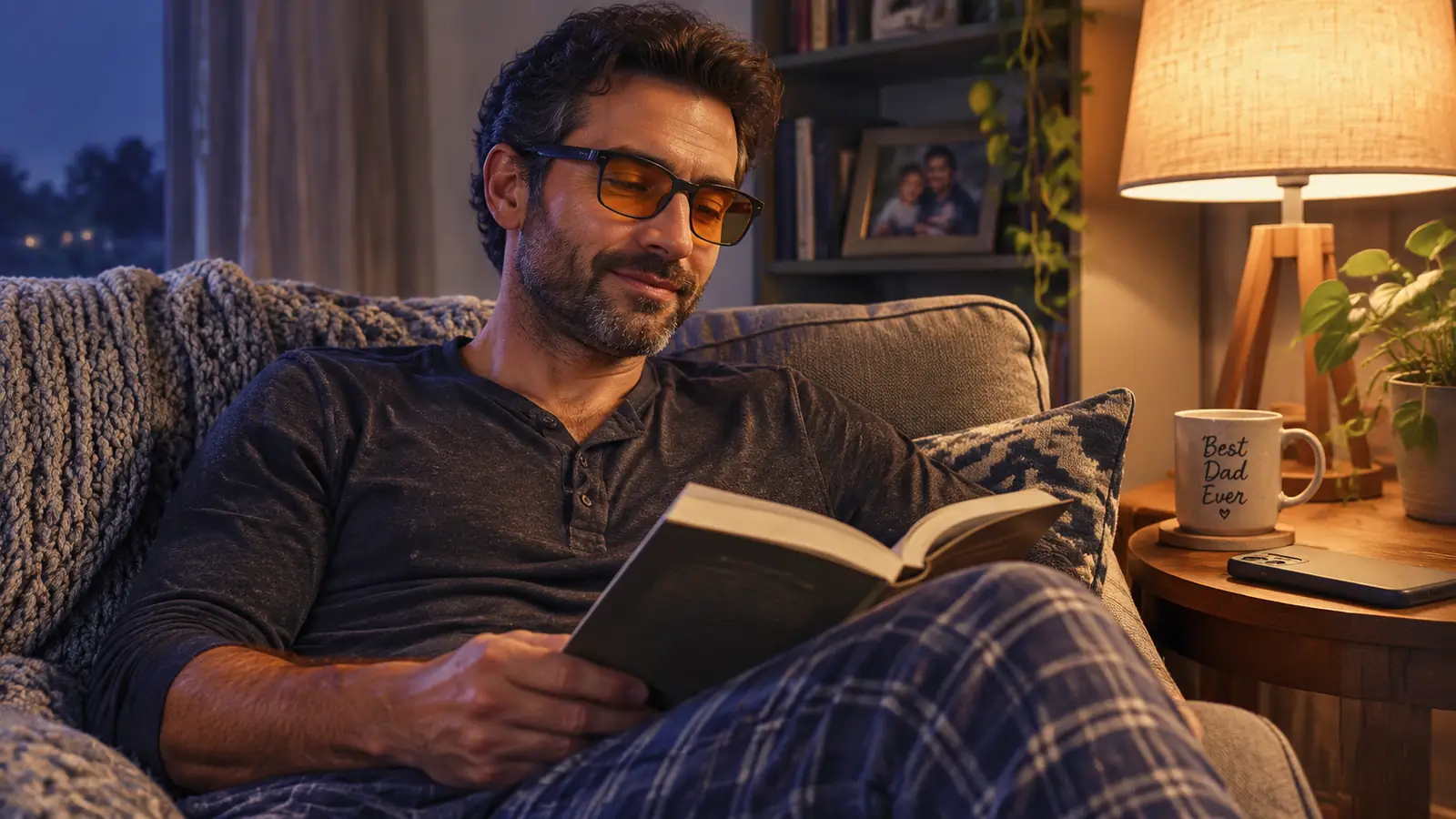
I used to think blue light glasses were one of those things you saw ads for and rolled your eyes at. Then I started wearing a pair every night after dinner, and it changed how fast I actually fall asleep. Between answering work emails on my laptop, catching up on shows once the kids are down, and scrolling my phone in bed like everyone else, my eyes were getting hit with screen light right up until the moment I tried to close them. Blue light glasses gave my brain an actual off-ramp instead of a hard stop.
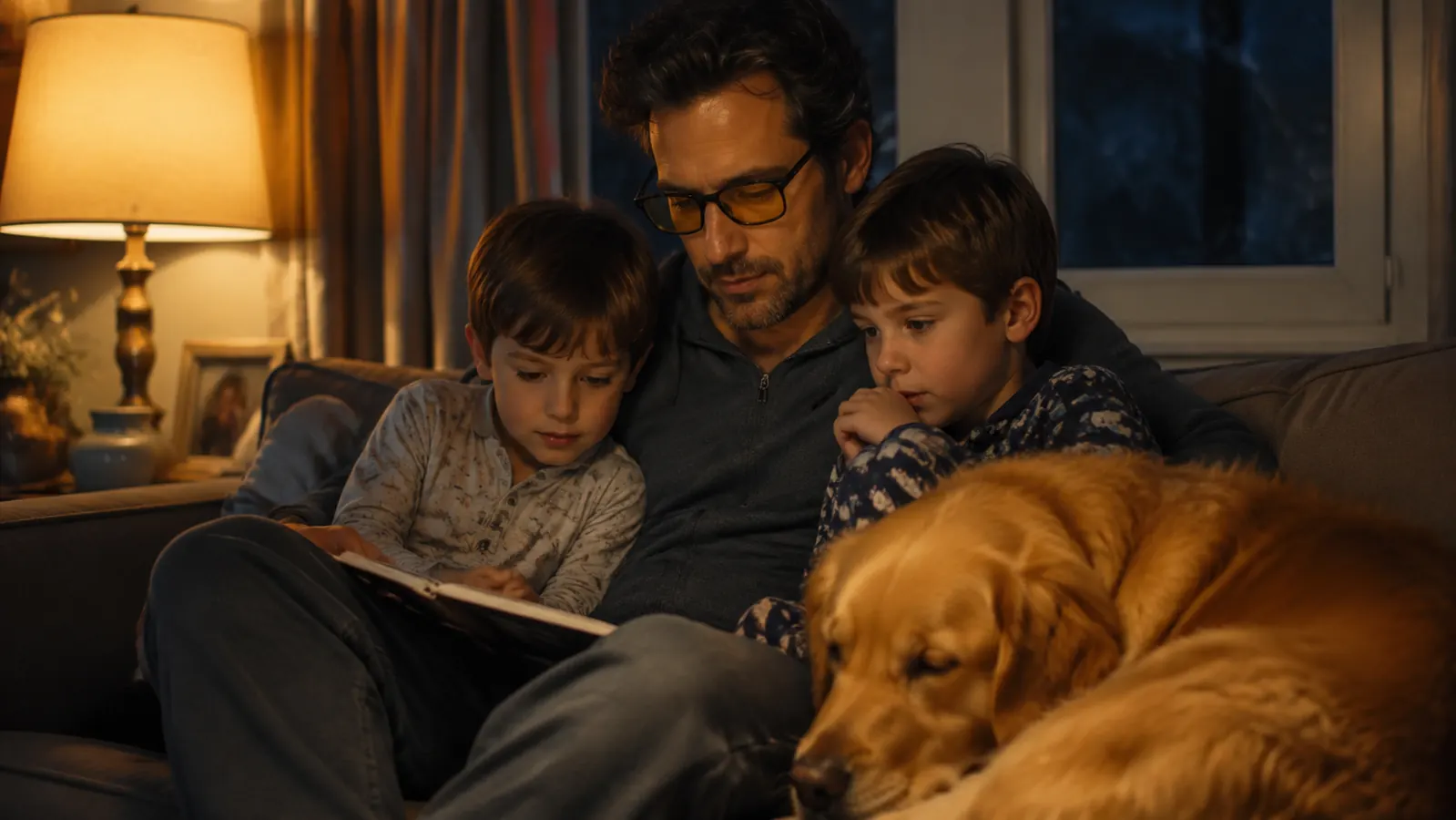
I run a full house. My wife Casey is home all day with our two kids, Jonah and Emma, and by the time they're finally asleep, Casey and I are the ones parked in front of screens trying to decompress. Neither of us has time to be tired the next morning. So when I started putting on a pair of amber-tinted blue light glasses about an hour before bed, and actually started falling asleep faster because of it, I wanted to lay out exactly why they work, not just tell you they do.
The Blue Light Glasses I Put On Every Evening
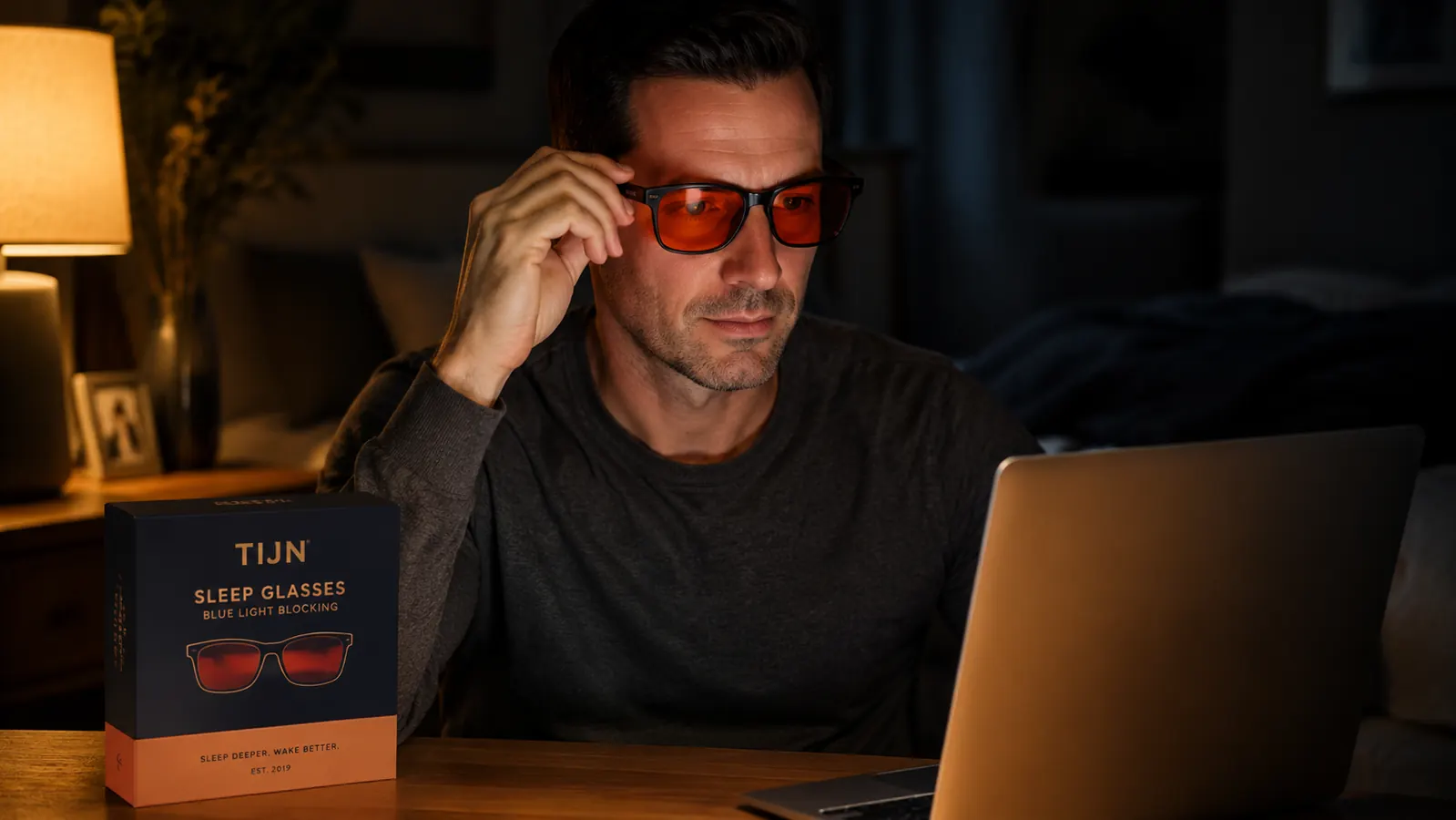
This is the exact pair of TIJN sleep glasses I keep by the couch. Amber and red tinted lenses, blocks blue and green light, and light enough that I forget I'm wearing them.
Amazon Check Today's Price on Amazon →They Block the Light That Suppresses Melatonin
Your body reads blue light as daylight, even at 9 p.m. under a lamp. Screens pump out a heavy dose of it, and that signal tells your brain to hold off on releasing melatonin, the hormone that actually makes you sleepy. Blue light glasses filter out that wavelength before it ever hits your eyes, so your body can start winding down on schedule instead of getting confused by a laptop pretending to be the sun.
I Fall Asleep Noticeably Faster
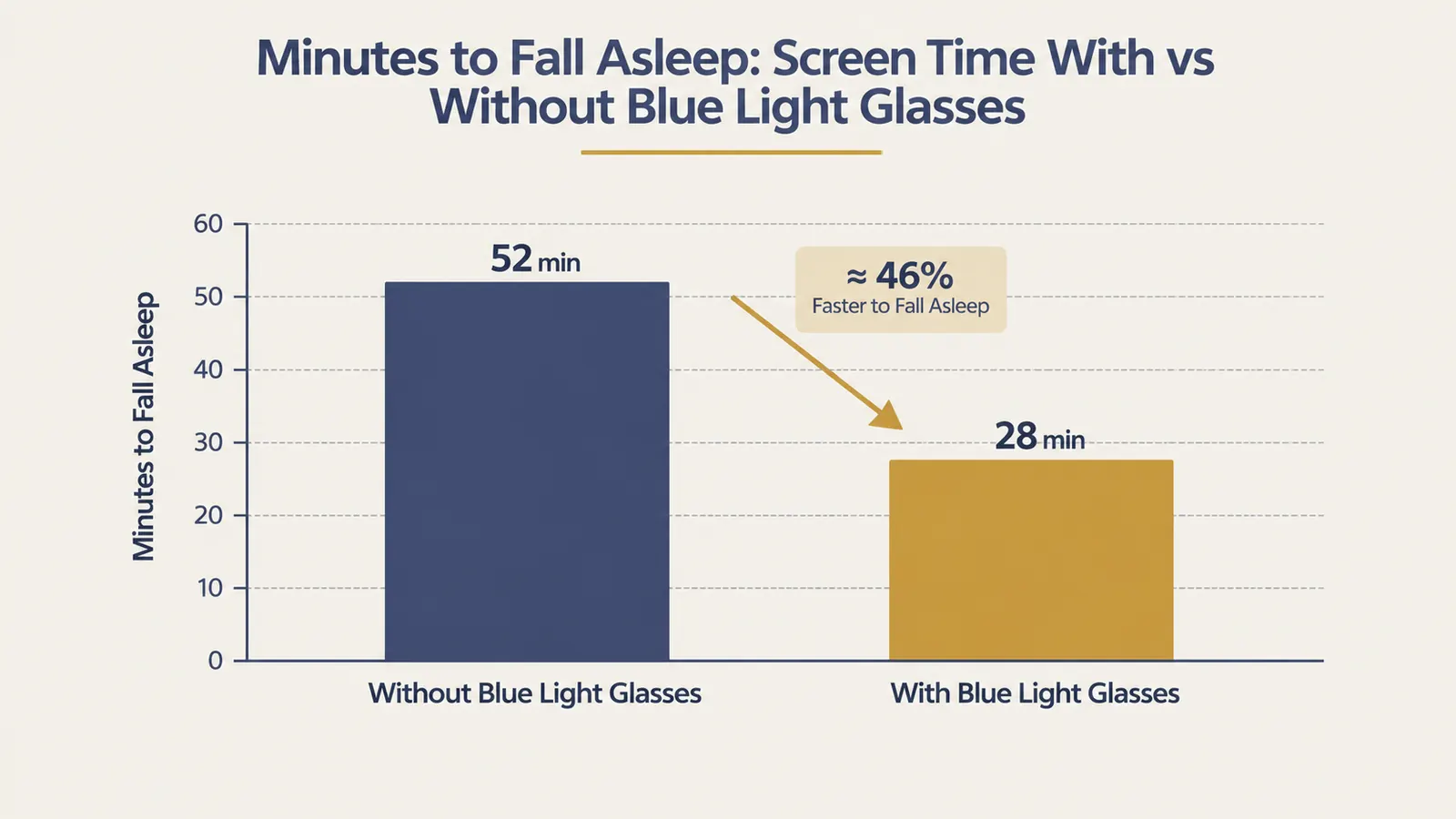
I started tracking roughly how long it took me to fall asleep on nights I wore blue light glasses versus nights I didn't. On the nights I skipped them and just stared at my phone until my eyes gave out, I was easily lying there twenty or thirty extra minutes. With the glasses on during that last hour of screen time, I'm out faster, and it isn't subtle. That single change did more for my sleep latency than anything else I tried this year.
The Amber Tint Signals Nighttime to Your Brain
It's not just about blocking light, it's about the color of what gets through. The amber and red tinted lenses on my sleep glasses let warm tones pass while cutting the harsh blue and green wavelengths. That warm cast is closer to firelight than fluorescent light, and your brain has understood firelight as a bedtime cue for a very long time. Putting these on is like flipping a switch that tells my whole nervous system the day is winding down.
I Can Still Answer Emails Without Wrecking My Sleep
I'm not going to pretend I can just quit screens after 8 p.m. Some nights I still have work emails to clear or a show Casey and I are watching together. Blue light glasses let me keep doing that last hour of normal evening stuff without paying for it at 2 a.m. staring at the ceiling. I don't have to choose between finishing my inbox and actually sleeping well, which is the trade I was making before.
My Eyes Aren't Burning by Bedtime Anymore
Between working on a laptop all day and then relaxing with a phone in hand at night, my eyes used to feel gritty and strained by the time I actually got into bed. That kind of eye fatigue makes it harder to settle down, even after the screen is off. Wearing sleep glasses with red and amber lenses during those evening hours cut that burning, tired feeling way down, and it turns out tired eyes and a calm mind are more connected than I realized.
The Headaches I Used to Get at Night Are Gone
A couple times a week I'd get a dull headache right around bedtime, always after a long stretch of screen time with the kids' bedtime chaos on top of it. I chalked it up to just being a tired parent. Since I started wearing blue light glasses in the evening, those headaches have basically stopped showing up. Less strain on my eyes during the hours leading up to bed apparently meant less tension building up in my head by the time I actually laid down.
They're Comfortable Enough I Actually Remember to Wear Them
I've owned cheap glasses before that pinched behind my ears after twenty minutes, and I'd just take them off and forget the whole habit. These TIJN sleep glasses are light on my face, the arms don't dig in, and I genuinely forget I have them on most nights. That matters more than the lens tint itself, because blue light glasses only work if you actually keep them on your face for the hour that counts.
They Also Cover Gaming and Late-Night Screen Fatigue
On the nights I sit down for an hour of gaming after the kids are asleep, the red lens tint on these glasses is built specifically for that kind of screen fatigue, not just general blue light. It's the same pair I already wear for the wind-down hour, so I'm not juggling two different sets of glasses depending on whether I'm reading, watching TV, or on the computer. One pair covers the whole evening.
It's the Cheapest Sleep Habit I've Built All Year
I've spent real money on sleep gadgets that ended up in a drawer within a month. A pair of blue light glasses costs far less than most of that, and unlike a lot of sleep gadgets, this one is something I actually reach for every single night without fail. Before I bought anything bigger for my sleep, this was the low-cost habit that proved to me the screen-light theory was actually true for my own body.
They Became a Family Habit, Not Just Mine
Once Casey saw how much faster I was falling asleep, she started wearing a pair during her own wind-down time after Jonah and Emma go down. Even our kids' evening screen time got a second look, since we're more aware now of how much light exposure is hitting everyone right before bed. What started as my personal experiment turned into something closer to a household rule, and Biscuit is the only one in this house who doesn't need a pair.
What I'd Skip
Blue light glasses aren't a cure for every sleep problem, and I don't want to oversell them. If your bedtime routine still involves scrolling for two hours straight in a pitch dark room, the glasses will help with the light exposure, but they won't fix the habit of staying up too late in the first place. I'd also skip the very darkest, heavily tinted lenses if you still need to read normal screen colors accurately during that last hour, since some of the deeper tints distort color more than you might want for regular use. And if you have an existing eye condition, it's worth asking your eye doctor before making any tinted lens part of your nightly routine, blue light glasses included. For an ordinary case like mine, too much evening screen time with no buffer before bed, this has been one of the simplest changes I've made all year.
Blue light glasses didn't change what I did in the evening, they just changed how fast I fell asleep afterward.
Ready to Try the Blue Light Glasses That Changed My Evenings
If even a few of these reasons sound like your house, this is the same pair of TIJN sleep glasses sitting by our couch every night. Amber and red tinted lenses, lightweight, and easy to build into any wind-down routine.
Amazon Check Today's Price on Amazon →