
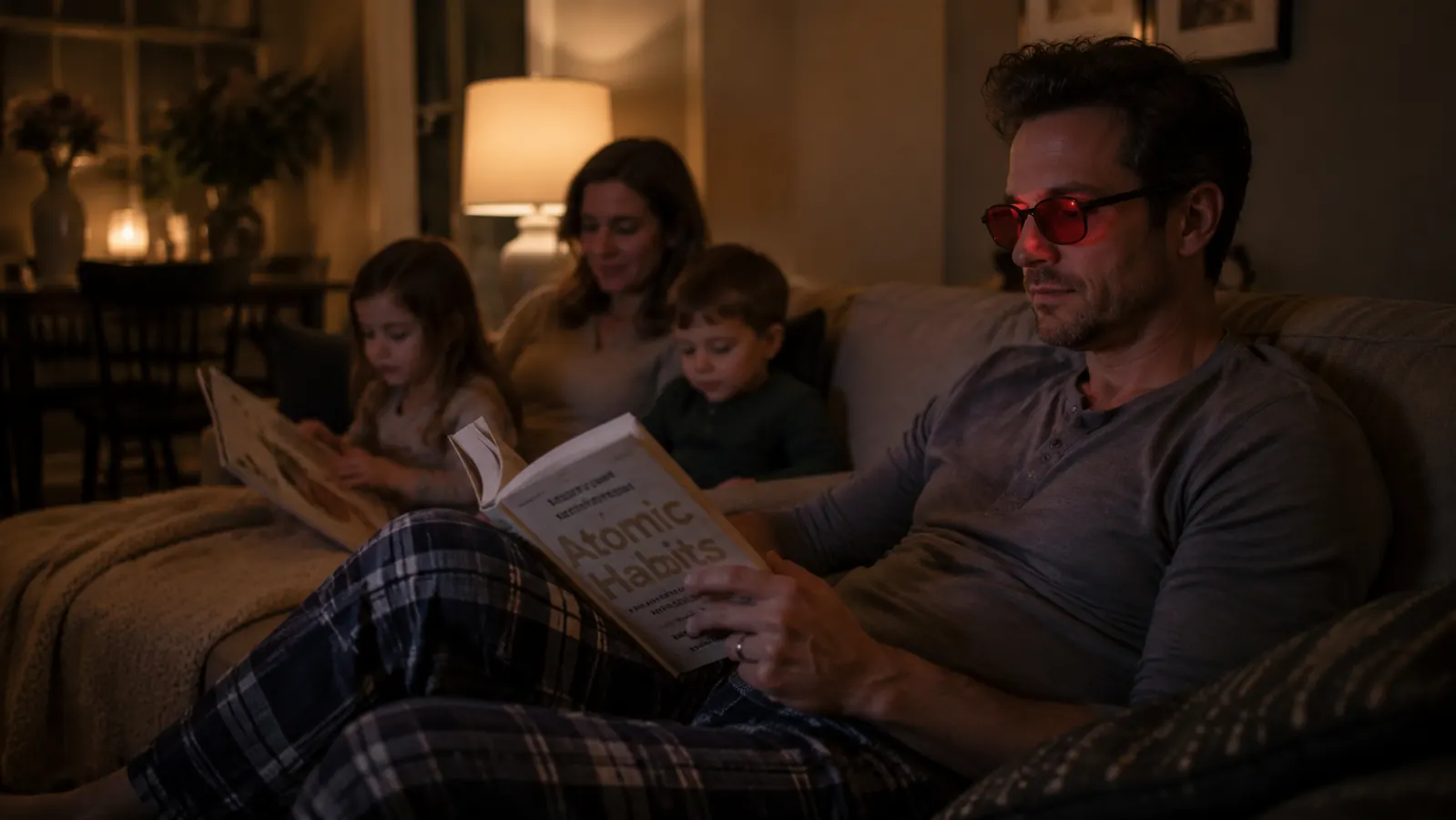
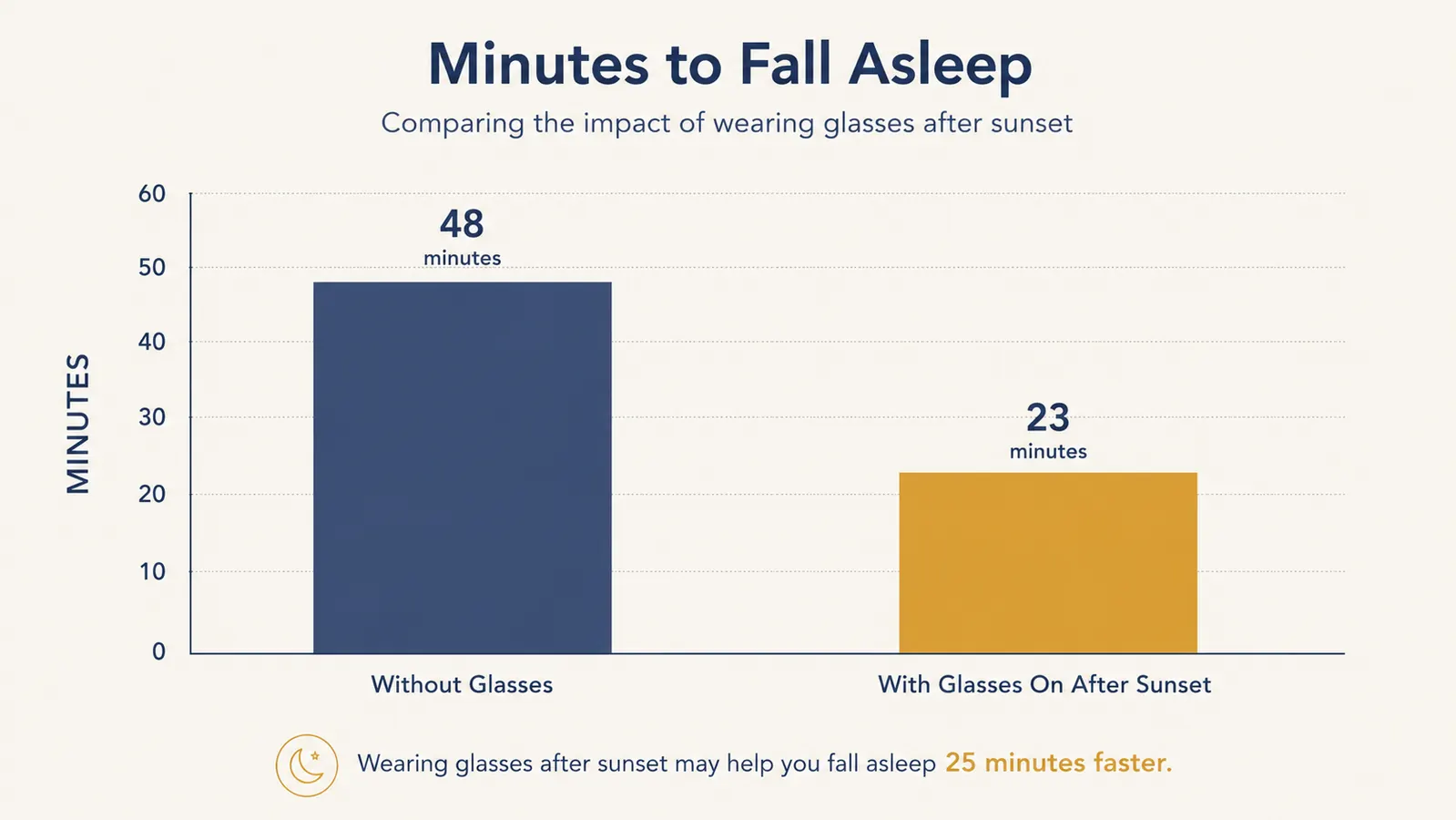
For most of last year, my evenings looked the same. Dinner, dishes, kids down by eight, and then me on the couch with a laptop or a phone until my wife Casey finally told me to turn it off. By the time I actually got into bed, my eyes felt tired but my brain was wide awake. I'd lie there for forty minutes, sometimes longer, staring at the ceiling fan while our dog Biscuit snored at the foot of the bed like it was nothing. A pair of TIJN blue light glasses were the thing that actually broke that cycle for me, not because they're magic, but because they gave my evening routine a hard start time instead of a fuzzy one.
I want to walk through exactly what I do now, step by step, because I know 'wear blue light glasses' by itself isn't a routine. It's one piece of a routine, and the piece before and after it matter just as much. This is the version that's actually worked for me over the past several months, not a theoretical one, and it's built around a real house with two kids, a dog, and a wife who works just as hard as I do keeping the evenings sane. If you're the kind of person who reads reviews before buying anything, I'll say up front that the specific pair I use is TIJN's red-lens sleep glasses, and the routine below only clicked into place once I stopped treating them as a one-off purchase and started treating them as a nightly habit.
The Glasses I Put On Every Night at Sunset
TIJN's red-lens sleep glasses are the piece that made this routine stick for me. They're inexpensive, they don't look ridiculous on the couch, and putting them on became the signal my brain needed that the day was winding down.
Amazon Check Today's Price on Amazon →Step 1: Pick a Real Time to Start Winding Down, and Put It on the Calendar
Every version of this routine falls apart if it doesn't have an actual start time. For us, the kids, Jonah and Emma, are in bed by eight most nights, and that's my anchor. Once their door closes, I treat the next ninety minutes as my wind-down window, not more screen time to catch up on emails I ignored all day. I used to treat 'bedtime' as whenever I happened to feel sleepy, which in practice meant it drifted later and later depending on what was on the laptop.
I used to think I'd just 'feel tired' and head to bed naturally. That never happened. Left on my own, I'd scroll until Casey asked why I was still awake. Picking eight o'clock as the hard start, the same time every night including weekends, is what made the rest of these steps possible. Without a fixed time, blue light glasses just become another thing you forget to do, sitting on the side table while you keep scrolling under the same harsh light that was the problem in the first place.
The calendar part matters more than it sounds like it should. I set a recurring phone reminder for eight, not because I need an alarm to tell me the kids are in bed, but because the buzz itself became part of the cue. It buzzes, I put the phone face down, and the next thing I reach for is the glasses instead of whatever tab I had open. It took about two weeks of the reminder actually going off before it stopped feeling like a chore and started feeling automatic.
Step 2: Put the Glasses On Before the Screens Come Back Out, Not After
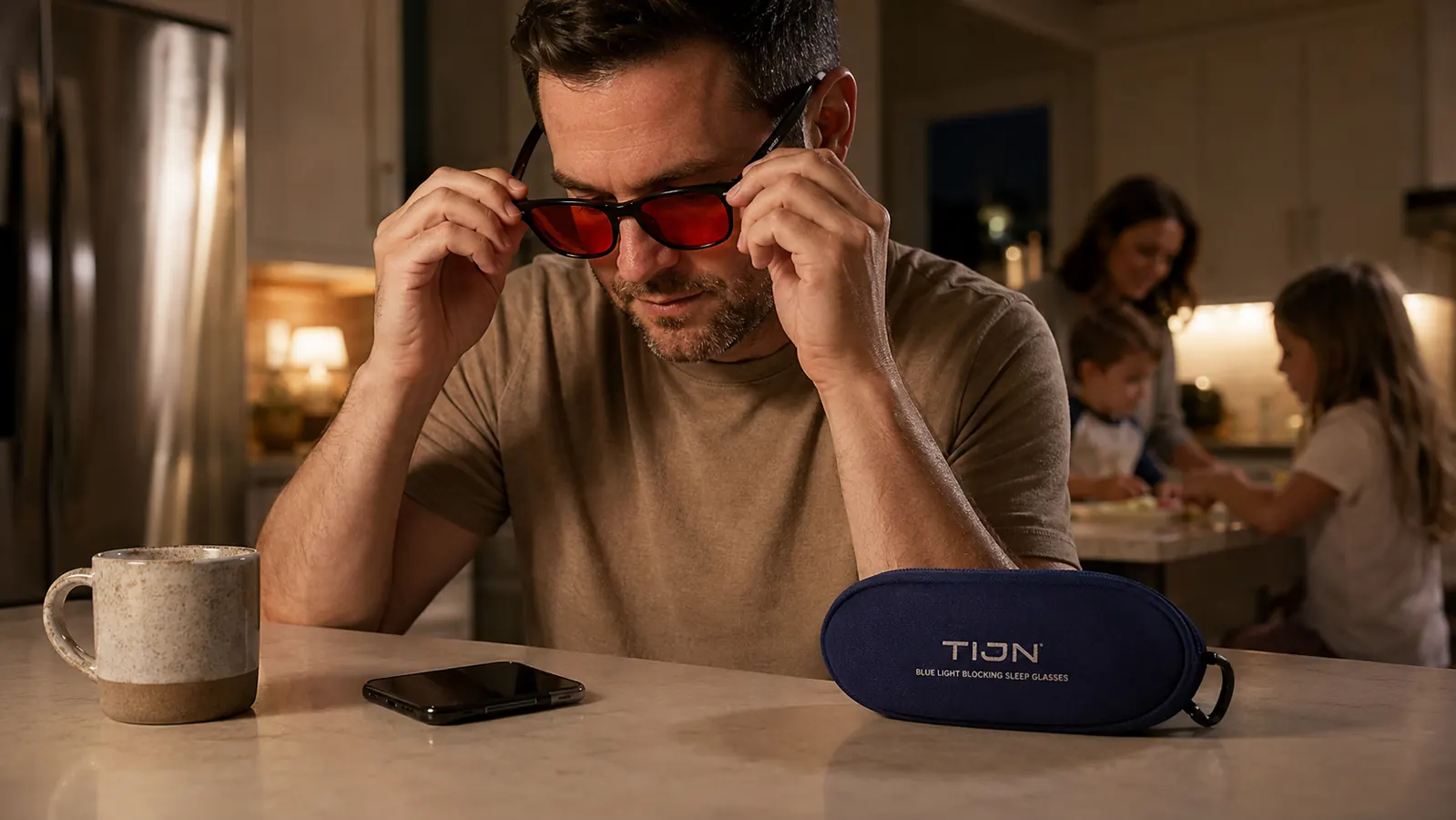
This is the step people get backwards. I used to wait until my eyes already felt strained to reach for the TIJN glasses, which is a bit like putting sunscreen on after you're already sunburned. Now I put them on at eight, before I open the laptop back up to finish an email or watch anything with Casey, not after. The order matters because the whole point is to get ahead of the light exposure, not undo it once your eyes are already tired and your brain is already stimulated.
The lens on these is a deep amber red, which blocks a meaningful chunk of the blue and green wavelengths that keep your brain from ramping up melatonin production. I noticed the difference mostly in how my eyes felt by nine thirty, not gritty and tired in that strained way, and in how much less resistance I felt toward actually closing the laptop when the time came. Biscuit usually plants himself on my feet around this point, which is its own kind of signal that the house is settling down.
One thing I'll add, since I know some people wear glasses already: these fit over my regular prescription glasses without much fuss, which almost kept me from bothering at first. I assumed they'd be too bulky. They're not. That's a small detail, but it's the difference between a habit you keep and one you quietly abandon after a week because the glasses felt annoying every time you put them on over your own pair.
Step 3: Dim the Actual Room, Not Just the Screen
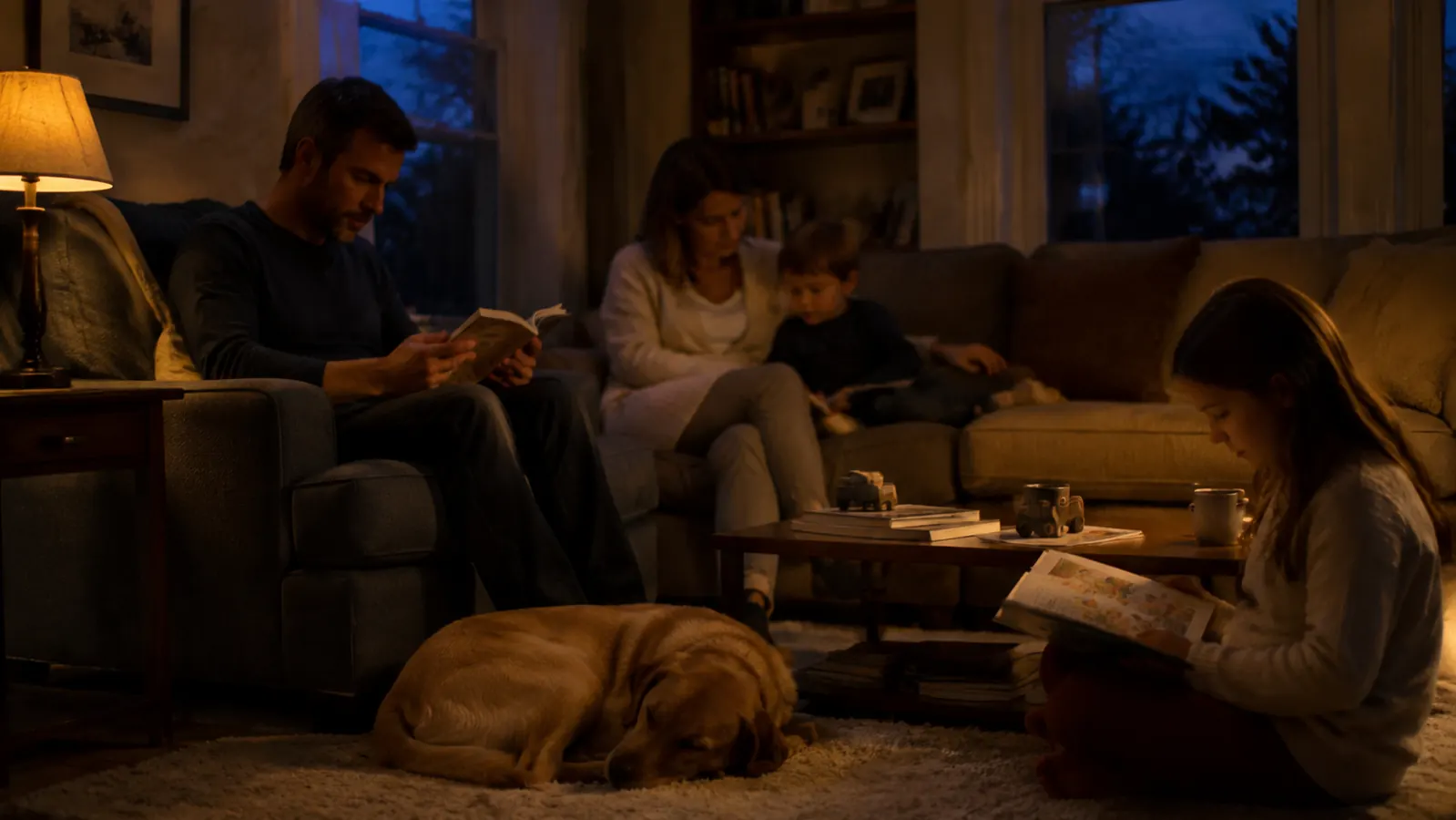
Blue light glasses handle the light coming off your phone and laptop, but they don't do much if you're sitting under a bright overhead kitchen light or a cool white ceiling fixture. I go around and switch off the overheads and turn on two lamps in the living room, both with warm bulbs, somewhere around the same time I put the glasses on. It takes about ninety seconds and I do it on autopilot at this point.
This sounds small, but the combination matters more than either piece alone. Warm, dim room light plus a red lens filtering the screens in front of you gives your whole evening a consistent, low-stimulation signal instead of a mixed one. Casey noticed this before I did, actually. She said the living room felt calmer around eight thirty once I started doing both together instead of just wearing the glasses under bright lights, and I think she's right that the room itself sets a tone the glasses alone can't.
If your house has a dimmer switch anywhere, use it. Ours doesn't in the living room, so lamps do the job instead. Either way, the goal is the same: by the time you sit down for your wind-down window, nothing in the room should be fighting against what the glasses are trying to do. I even swapped one hallway bulb to something warmer once I realized it was the last bright spot left in the house at that hour.
Step 4: Give Yourself a 20-Minute Anchor Activity While You're Wearing Them
The glasses work best when they're paired with something to actually do, not just sitting there staring at a dimmer version of the same phone screen. My anchor is reading a few chapters of whatever paperback is on my nightstand, usually something that has nothing to do with work. Some nights it's folding laundry instead. The activity matters less than having one, because it gives the wind-down window a shape instead of just being twenty minutes of low-level scrolling with a red tint on it.
If you're going to keep using a phone or tablet during this window anyway, and most of us do at least a little, the glasses matter more, not less. I still check the weather or answer a quick text most nights. The point isn't to eliminate every screen. It's to blunt the wavelengths that are working against you while you do the things you were going to do anyway.
Casey does a version of this too, usually tea and a crossword at the kitchen table while I'm on the couch. We don't do the exact same anchor activity, and that's fine. What matters is that both of us have landed on something low-stimulation and repeatable instead of whatever screen happens to be closest, and that Biscuit has somewhere warm to park himself while we do it.
Step 5: Keep the Same Wake-Up Time, Even on Weekends
This step has nothing to do with the glasses directly, but it's the one that makes everything else work. Your body clock responds to consistency on both ends, not just the evening side. I get up at six most days because that's when Jonah wakes up regardless of what day it is, and honestly that forced consistency has done more for how fast I fall asleep than almost anything else on this list.
When I used to sleep in until nine on Saturdays, Sunday nights were always rough, wide awake at eleven with nothing to blame but a shifted clock. Keeping wake-up time steady, even loosely, means the wind-down routine and the glasses have a stable rhythm to slot into instead of fighting a moving target every few days. A kid who wakes up at six either way makes this step easier to enforce than it would be if I were doing it purely on willpower, and honestly I'll take the help wherever it comes from at this point.
The glasses didn't put me to sleep. Putting them on at the same time every night, in a dim room, with something to actually do, is what put me to sleep.
What Else Helps Once the Routine Is in Place
A few things stack on top of this pretty easily. Dropping the bedroom temperature a few degrees before we get in bed makes a noticeable difference, more than I expected. A white noise machine covers the sound of Biscuit's tags jingling when he repositions at 2am, which used to wake me up more than I realized. None of these replace the core routine above, they just make it more comfortable once the routine itself is doing the heavy lifting.
I'd also say don't overthink the glasses themselves. I went with TIJN's version mainly because the price made it an easy first try, and the rating history on Amazon gave me enough confidence it wasn't going to fall apart in a month. They haven't. Mine still sit on the side table by the couch, which is honestly the biggest compliment I can give a pair of glasses, they're still in the rotation months later instead of shoved in a drawer.
If you want to see how this specific pair stacks up against pricier options, or how it's held up for me after using it every night for months, I've written more detail into that side of things separately. But if you're just getting started, don't wait for the perfect setup. Pick a start time, put the glasses on before the screens come back out, dim the room, give yourself something to do with your hands, and get up at the same time tomorrow. That's the whole routine, and it's the version I still run most nights, tweaks and all.
Start Tonight With the Glasses That Made This Routine Stick
If you only change one thing this week, put on a pair of red-lens blue light glasses at the same time every evening. TIJN's version is the one I still reach for, and it's an easy, low-cost first step before you rebuild the rest of the routine around it.
Amazon Check Today's Price on Amazon →