

Mouth tape sounds strange until you've spent months waking up with a dry mouth, a scratchy throat, and a headache no amount of coffee fixes. That was me most mornings this past winter. My wife Casey started elbowing me awake because I was snoring through my open mouth loud enough to set our dog Biscuit off in his crate down the hall. I tried the usual stuff first, propping myself up on an extra pillow, forcing myself onto my side, running a humidifier in the corner of the room. None of it touched the actual problem, which was that I was breathing through my mouth all night instead of my nose. Taping my mouth shut turned out to be the simplest fix I found, but it took me almost two weeks of trial and error to do it right. Some mornings my daughter Emma would come downstairs while I was still half-asleep and ask why daddy sounds like a dinosaur, which is its own kind of motivation to fix something.
If you're here because someone told you to just 'try mouth tape' and left it at that, I understand the confusion. The idea of taping your own face sounds a little extreme, and the first time I tried it I did it wrong, used a roll of tape that wasn't meant for skin instead of proper PATCH4U strips, half-panicked around 2am, and gave up before morning. This is the guide I wish someone had handed me before I started. Five steps, in the order I actually did them, so you don't waste your first week the way I wasted mine.
Before You Tape Anything to Your Face, Get Tape Made for Skin
My first attempt used whatever roll I found in the junk drawer. Don't do that. PATCH4U's tape is built for this specific job, hypoallergenic, latex-free, and it peels off clean in the morning instead of taking a layer of lip skin with it.
Amazon Check Today's Price on Amazon →One thing I need to say before the steps: PATCH4U mouth tape is for people whose mouth breathing comes from habit, mild congestion, or just falling asleep with their jaw slack, not for people with undiagnosed sleep apnea. If you snore so loud your partner sleeps in another room, if you ever gasp or choke awake, or if you wake up exhausted no matter how many hours you slept, talk to a doctor before you tape anything. Casey and I actually asked our family doctor about this at my last checkup, mostly because I wanted to make sure I wasn't masking something worse. He said the loud, steady, open-mouth snoring I described without pauses or gasping was consistent with plain mouth breathing, and mouth tape was reasonable to try. If your situation sounds different than that, get checked first. Tape is a tool for a specific problem, not a fix for every kind of bad sleep. I bring this up first because I don't want anyone reading a how-to guide and skipping the one step that actually matters most.
Step 1: Rule Out the Big Stuff, Then Pick a Tape Made for Skin
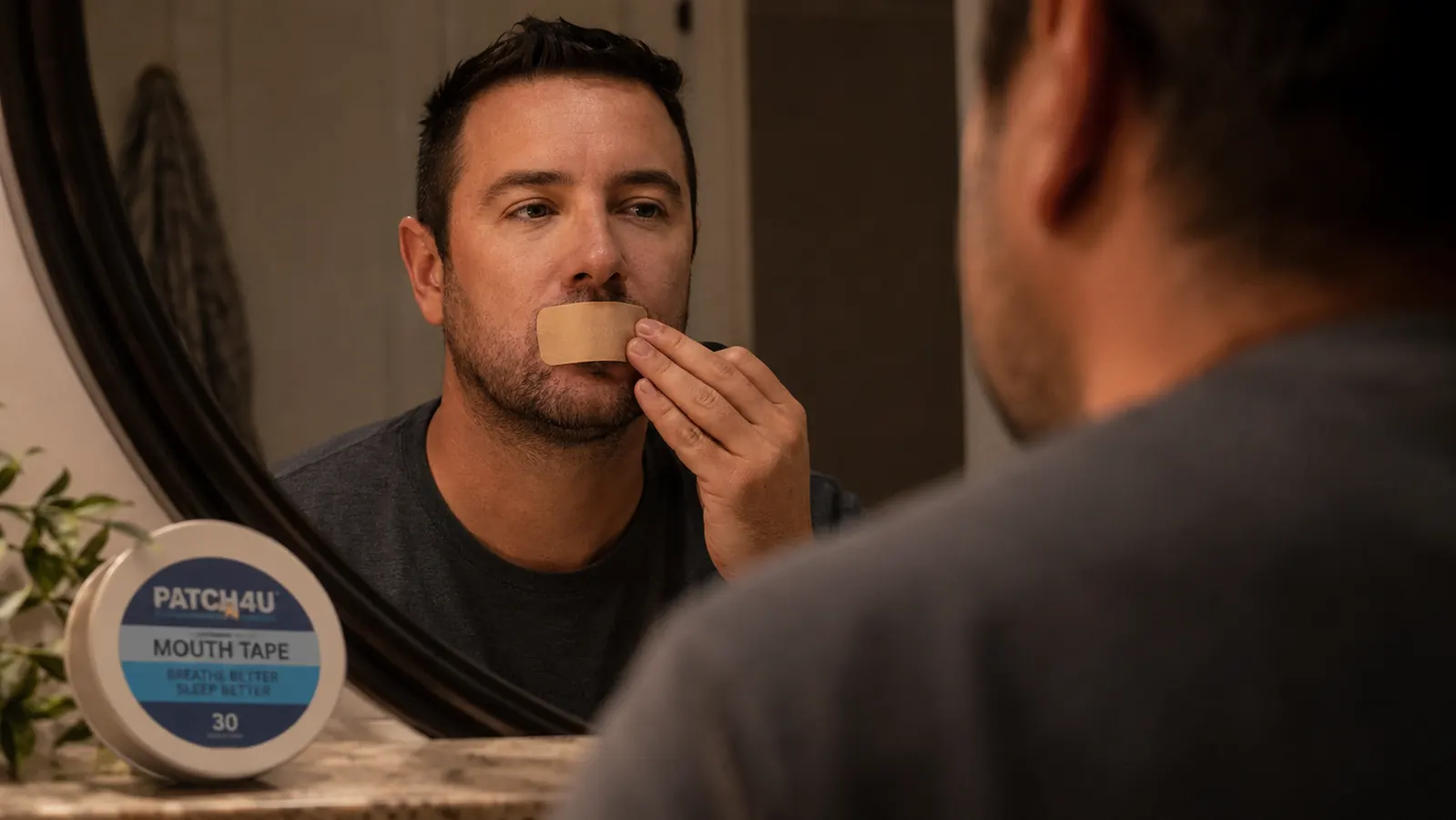
Once I'd cleared the sleep apnea question, the next decision was which tape to actually use. I know it seems like a minor detail, but it's the one that made the biggest difference between a good first week and a miserable one. Regular office tape or first-aid tape is built to stick hard and stay put, which is exactly wrong for something that sits on your lips for seven or eight hours a night. I went through two different rolls before I landed on PATCH4U, which is a cotton, latex-free tape that's gentle enough to wear on skin but still holds a strip in place through a full night.
The pack comes with thirty strips, which sounds like a lot until you realize you're using one every single night, plus a few extras for testing during the day. I keep mine in the drawer of my nightstand next to Casey's chapstick, so it's the last thing I grab before I turn off the lamp. If you have sensitive skin, and I do, mine gets irritated by adhesive bandages easily, this matters more than the price or the brand name on the box. It's also cheap enough per night that I never feel like I'm rationing strips or trying to stretch one out for two nights, which only made the adhesive weaker and the seal worse.
Step 2: Test It During the Day, Not for the First Time at 11pm
This is the step I skipped the first time, and it's the reason my first attempt failed. I went straight from reading about mouth tape to applying it right before bed, in the dark, half asleep, with zero idea how my skin would react or whether I'd feel claustrophobic. Around midnight I woke up with my heart racing because my nose was slightly stuffy from the day and I felt like I couldn't get enough air, so I ripped the tape off and swore off the whole idea for a month.
The second time around, I tested it on a Saturday afternoon while folding laundry. I put a small strip on, sat with it for twenty minutes, breathed through my nose, checked how my skin felt, and confirmed I could still say a muffled word or pull it off quickly if I needed to. That twenty minutes of daytime testing told me more than any article did. If you feel panicked or your nose is too stuffy to breathe through comfortably while awake and upright, you're not ready to wear tape to sleep yet. Clear your nose first, with a saline rinse or a warm shower, and try the daytime test again before you take it to bed.
Step 3: Prep Your Lips and Apply the Strip the Right Way
By the time I got this part right, my nightly routine looked pretty boring, which is exactly what you want. I wash my face like normal, then make sure my lips and the skin just around my mouth are completely dry before I ever touch the tape. Adhesive on damp skin peels off halfway through the night, and then you wake up with a strip stuck to your pillowcase instead of your face, which happened to me twice before I figured out the drying step mattered.
I use one vertical strip, roughly the width of two fingers, centered over my closed lips, running from just under my nose to just above my chin. That's different from a horizontal strip sealing the whole mouth shut side to side, which felt too restrictive for me and made me feel like I couldn't move my jaw at all. A single vertical strip keeps your lips gently closed while still letting you open your mouth a little in an emergency, cough, or talk in a pinch if one of the kids wakes up and needs something.
Press the strip down with your fingertip along both edges so it seals fully, especially near the corners of your mouth where it tends to lift first. I do this sitting on the edge of the bed with the lamp still on, so I can see what I'm doing instead of fumbling in the dark. It takes about fifteen seconds once it's part of the routine.

Step 4: Build Up Slowly Over Your First Week
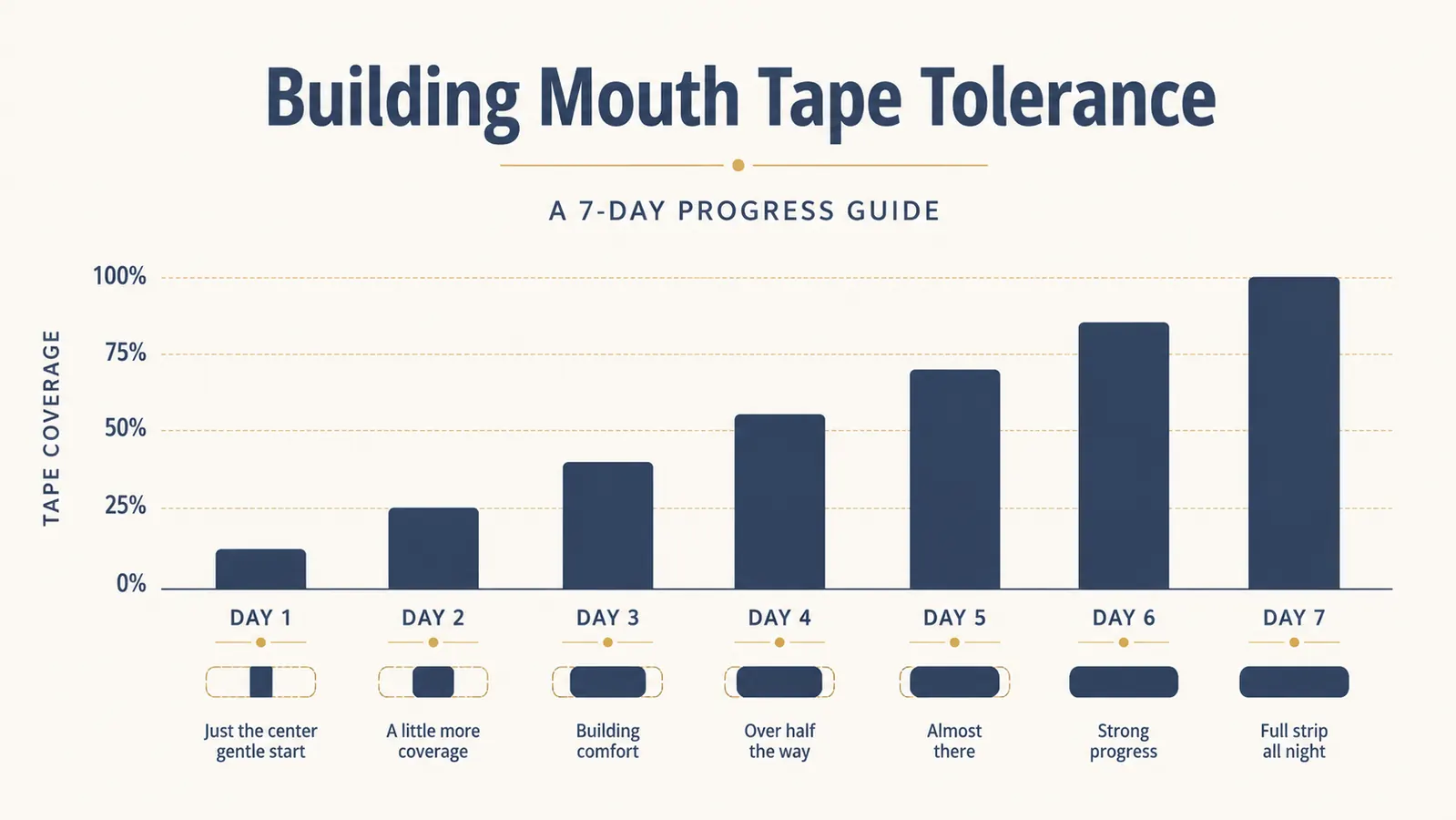
This is the step almost every guide skips, and it's the one that actually matters. Nobody should go from zero to a full night sealed shut on night one. My first three nights, I used a partial strip, just covering the center of my lips instead of running the full width, and I told myself I could pull it off any time I woke up feeling uneasy. Twice that first week I did wake up and peel it off around 3am, and that's fine. It's not a failure, it's your body learning that breathing through your nose all night is actually possible and safe.
By night four or five, I moved to a full strip but kept a small gap unsealed at one corner, just enough that I knew I could push air out of the side of my mouth if I needed to. By the end of week one, I was using a full strip sealed all the way and sleeping straight through without thinking about it. Somewhere around night nine or ten, I woke up and realized I hadn't consciously thought about the tape once during the night. That's the point where it stops being a thing you're managing and starts being part of your normal routine, the same as brushing your teeth.
If you rush this part, tape yourself fully shut on night one with no easy way out, you're much more likely to have a bad experience and quit. Give yourself the same week I gave myself. It's not slow, it's just enough time for your body to adjust.
Step 5: Know What's Normal and What Means Stop
A little dry-mouth feeling in the first few mornings is normal, so is some mild redness right where the tape sat, especially if your skin is on the sensitive side like mine. Both of those faded for me within the first week as my skin got used to the adhesive and my nasal breathing improved enough that I wasn't drying out my mouth from the inside anymore. Rotating the exact placement of the strip by a few millimeters each night, instead of pressing it in the identical spot every time, helped a lot with the redness.
What isn't normal, and what should make you stop and talk to a doctor, is waking up gasping, feeling genuinely unable to breathe through your nose at all even after clearing congestion, or any real skin reaction like blistering or a rash that spreads beyond the tape line. None of that happened to me, but I want to be honest that mouth tape isn't the right tool for everyone, and if your body is telling you something's wrong, believe it over any guide, including this one.
What Else Helps
Mouth tape did most of the heavy lifting for me, but it worked better once I stacked a couple of other small habits on top of it. I started sleeping on my side more consistently, which keeps the jaw from falling open as easily as sleeping flat on my back. I also run a cool-mist humidifier in our bedroom during the drier months, since a stuffy nose is the single fastest way to sabotage a night of tape, you can't breathe through a nose that's fully blocked, tape or not.
A few nights a week I'll also use a nasal strip across the bridge of my nose on top of the mouth tape, mostly during allergy season when my nose feels tighter than usual. The two aren't competing solutions, they solve different halves of the same problem, tape keeps your mouth shut and a nasal strip helps keep your nasal passage open so breathing through your nose actually feels easy instead of forced.
I also swapped my old flat pillow for one with a bit more loft under my neck, which keeps my chin from tipping back and my jaw from dropping open the second I fall asleep. None of these extra habits replace the tape, they just make the nights where everything lines up, side sleeping, clear nose, good pillow, feel effortless instead of like I'm fighting my own body to keep my mouth shut.
The first week isn't about willpower, it's about giving your body permission to learn that nose breathing all night is actually possible.
Give Your First Week the Right Tape and It Gets Easier Fast
Most people who quit mouth tape after one bad night used the wrong tape or skipped the daytime test, not because taping doesn't work. Start with a strip made for skin, build up slowly, and give it the same week I gave myself.
Amazon Check Today's Price on Amazon →