

Every night around 7:45, I end up propped against our headboard reading picture books to Emma and Jonah, and every night for years my lower back paid for it. Headboards are not designed for a grown man to lean against for twenty straight minutes while a six-year-old insists on "one more page." I'd finish story time, shuffle off to bed myself an hour later, and prop myself up again to read my own book before lights out. Two sessions a night against unpadded wood or a stack of sliding pillows. My back told me about it every single morning.
I ordered the ComfortSpa reading pillow with arms back in early spring after Casey got tired of hearing me complain about my shoulders while doing the dishes. Five months later it hasn't left our bed once, and I've got enough nightly data on it now to tell you exactly where it earns its keep and where it doesn't.
The Quick Verdict
A genuinely sturdy backrest with real armrests that held up to nightly use for five months straight. Not a luxury item, just a well-built, honest bed rest pillow.
Amazon Check Today's Price →My headboard hasn't touched my spine once in five months.
If bedtime reading, working from bed, or just sitting up with a laptop is quietly wrecking your back the way it was wrecking mine, this is the cheapest fix I tried before considering anything pricier.
Amazon Check Today's Price on Amazon →How I've Used It
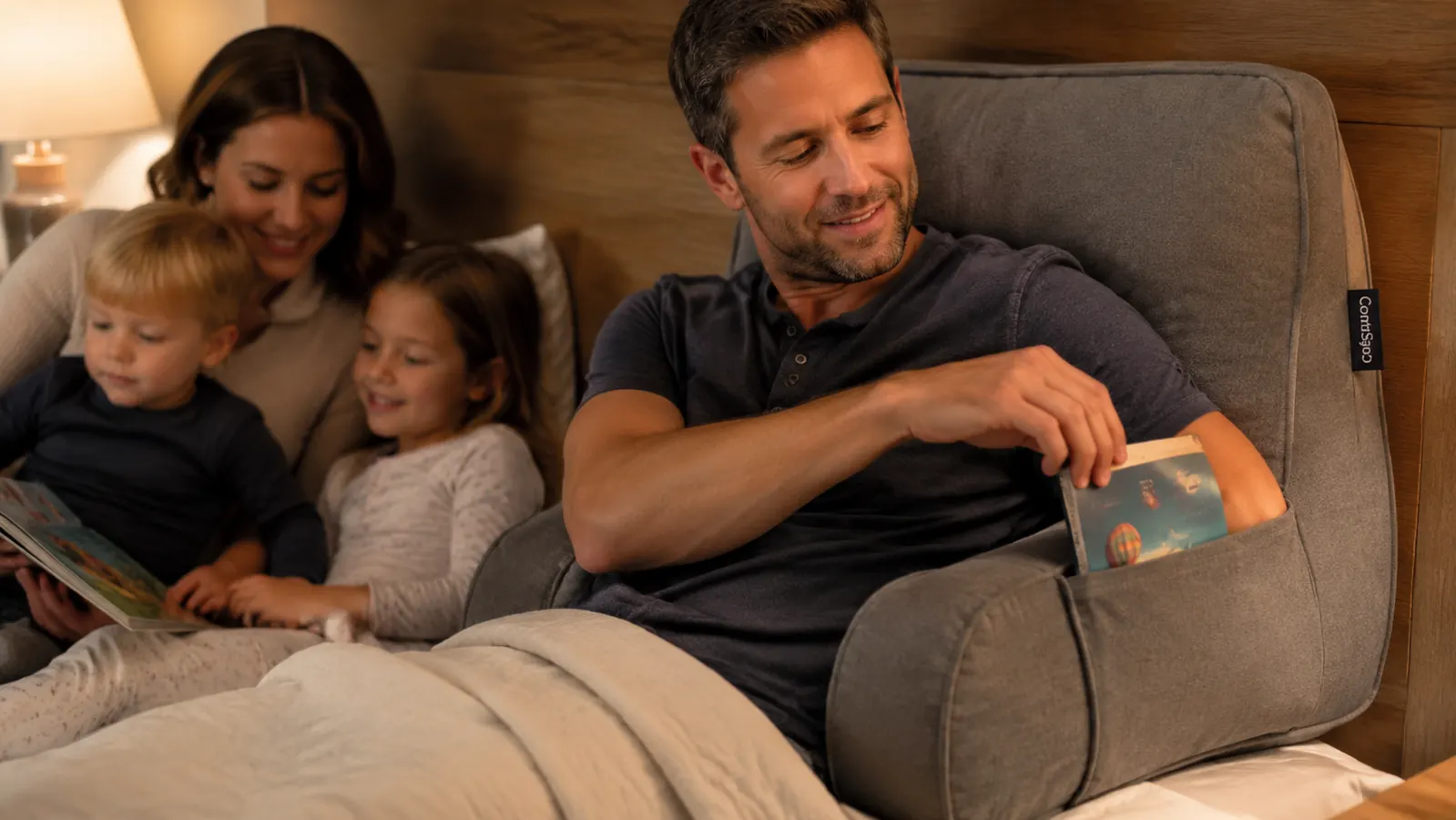
My routine is the same most nights. Story time with Emma and Jonah happens first, both kids piled on either side of me while I sit propped against the pillow with my forearms resting on the arms. Then, after the kids are down, I move it over to my side of the bed and use it again for my own reading, usually a paperback and a cup of decaf that Casey makes fun of me for drinking at night. I'm sitting up against this thing for a combined thirty to forty minutes most evenings, seven nights a week, which is about as real-world a stress test as a bed rest pillow gets.
I didn't baby it either. I've had it flattened under my full weight leaning back hard while Jonah climbed over my legs to get to his side of the story, I've had Biscuit hop up and flop against one arm before getting nosed off the bed, and I've hauled it in and out from behind the headboard most mornings when Casey wants the bed made properly. Five months of that kind of daily handling is a fair test of whether the filling holds its shape or goes flat.
I also started tracking something simple on my phone each morning: a 1 to 5 rating of lower back and neck stiffness right when I got up. I'm not a physical therapist and this isn't a clinical trial, it's one dad's nightstand notes, but five months of consistent nightly tracking is real information, not marketing copy.
What's Actually Inside It
The ComfortSpa is a large-sized bed rest pillow with a firm foam-and-fiber fill core, two padded armrests that stick out at roughly shoulder height, and a fabric pocket sewn onto one side big enough for a paperback, my phone, or the TV remote. The whole thing is shaped like a chair back without legs, essentially, and it's built to prop against a headboard or a stack of regular pillows and stay upright on its own.
The cover is machine washable, which mattered more than I expected once I realized Jonah eats a snack in bed roughly twice a week despite our rule against it. I've run the cover through the wash three separate times over five months, once for a genuine crumb disaster, and it's come out looking the same as it did on day one. No fading, no pilling on the fabric that I can see or feel.
The fill is firmer than I expected out of the box. My first thought unpacking it was that it felt almost too stiff, more like a piece of furniture than a pillow. That firmness is exactly what makes it hold you upright without collapsing at the base after twenty minutes, which is the entire problem with stacking two or three regular bed pillows behind your back. Regular pillows slump. This doesn't.
The armrests are the actual reason I bought this over a plain wedge pillow, and they're the part that's held up best. My shoulders used to ache from holding a book up with no support underneath my forearms. Five months in, the arms haven't flattened out or lost their shape, and they're still at a height that actually supports my elbows instead of just being decorative padding on the sides.
Five Months of Nightly Data
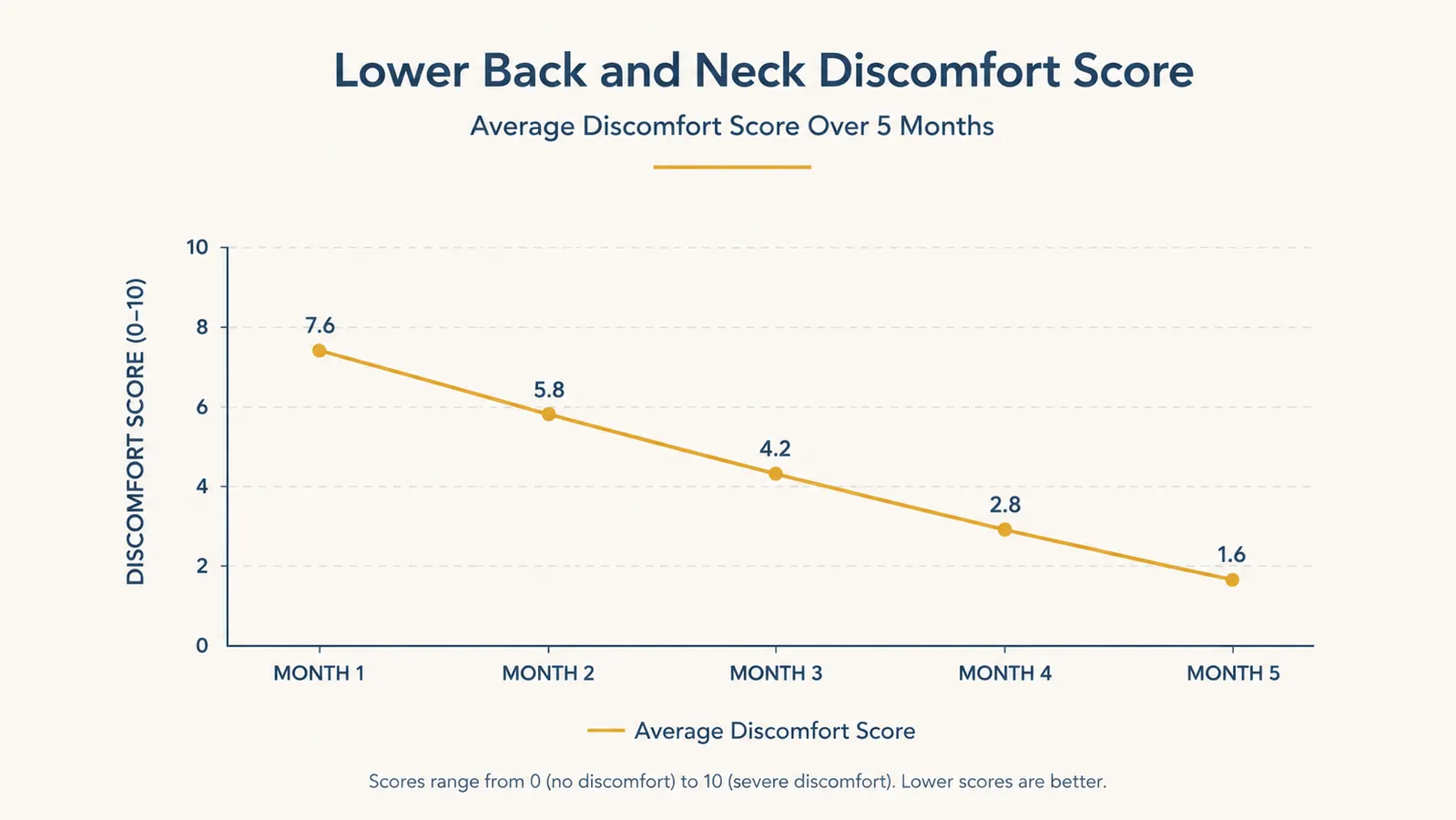
Week one felt almost too good to be true. My back stiffness rating, which had been sitting around a 3.6 out of 5 most mornings for as long as I'd been tracking anything, dropped to a 2.4 average by the end of the first week. I remember telling Casey it felt like cheating, going from wincing when I stood up to just, standing up normally.
By month two the improvement had leveled off and settled around a 1.7 average, and it's stayed close to that through month five. The biggest single change wasn't the back pain itself, it was how much longer I could comfortably sit through story time without shifting positions every few minutes. Emma noticed before I even mentioned it. She said I stopped saying "okay, last page, my back hurts" every night, which honestly was a fair callout on her part.
Casey ran her own informal test around month three, borrowing the pillow for a week while recovering from a minor shoulder strain, propping herself up to work on her laptop from bed a few mornings. She confirmed independently that the armrests took real weight off her shoulders during typing, which mattered more to me than any number on my own tracking sheet. That's the kind of proof that holds up at the kitchen table when someone asks if this thing actually works or if I'm just talking myself into liking a pillow I paid for.
The one place I noticed a real change over time was the firmness of the base cushion, which softened maybe ten percent by month four compared to fresh out of the box. It's still supportive, still holds its shape, but it's not quite as stiff as week one. For a pillow used nightly for five straight months, that felt like a reasonable amount of break-in rather than a sign it's wearing out.
The Tradeoffs Nobody Puts in the Marketing
This thing is bulky. It doesn't fold flat, it doesn't compress down for storage, and it takes up real space behind our headboard during the day. If you've got a small bedroom or you share a bed and both people want one, you're looking at a genuinely large object living on the bed most of the time, not something you tuck into a drawer.
The armrests, while genuinely useful, do stick out wider than the pillow itself, which means if you're reading in a queen bed with a partner right next to you, elbows can bump. Casey and I worked out an arrangement where I sit more toward my side, but it took a week or two of nightly negotiating before we found a position that didn't involve getting jabbed by an armrest at 9 p.m.
I also noticed the pocket on the side, while a nice touch, isn't deep enough to hold anything heavier than a paperback and a phone without things sliding out when I shift positions. I lost my reading glasses behind the headboard twice in the first month before I learned to just set them on the nightstand instead of trusting the pocket with them.
The firmness that makes this so good for support also means it's not what I'd call plush or cozy in the traditional pillow sense. If you're expecting something soft to sink into, this isn't that. It's closer to sitting against a padded chair back than a fluffy pillow, and that's by design, but it's worth knowing going in.
Other Options I Considered First
Before landing on the ComfortSpa I looked at a couple of the other well-known bed rest pillows with arms, the kind that show up first in every search for this. Some are noticeably pricier and marketed with more of a memory foam feel, others are cheaper but reviewers consistently mentioned the fill going flat within weeks. I wanted something in the middle that would hold up to actual nightly use in a house with two kids and a dog, not just look good in a photo.
I also tried just stacking two firm regular pillows against the headboard for a couple of weeks before buying this, which is the free option most people try first. It works for about ten minutes before you slide down and end up flat on your back anyway, which defeats the whole point. The dedicated armrests and the wider, stiffer base are genuinely what separates a bed rest pillow like this from a pile of your existing bedding, and I wrote a full side-by-side breakdown comparing this exact ComfortSpa against one of the other popular husband pillow brands, since the differences in fill and armrest height matter more than they look like they would on paper.
Doing the math on cost over five months of nightly use made this an easy keep. It works out to a small fraction of what I'd spend replacing flattened regular pillows every few months, and I haven't had to rotate or fluff anything to keep it usable. For something that gets used every single night in our house, that durability mattered more to me than shaving a few dollars off the upfront cost.
What I Liked
- Firm base holds you upright through a full 30-40 minute reading session without slumping
- Padded armrests genuinely support your forearms and shoulders, unlike a plain wedge pillow
- Machine washable cover held up through three washes with no fading or pilling
- Held its shape through five months of nightly use, including two kids and a dog climbing on it
- Side pocket is a nice touch for a paperback or the remote
Where It Falls Short
- Bulky and doesn't compress down, takes up real space if your bedroom is small
- Armrests stick out wide enough to bump a partner's elbows in a queen bed
- Side pocket isn't deep enough for anything heavier than a paperback and a phone
- Firm rather than plush, not the right feel if you want something soft to sink into
- Base cushion softened noticeably, though not unreasonably, by month four
Emma noticed I stopped saying my back hurt before I ever mentioned the pillow was helping. Kids catch on to the small stuff before you do.

Who This Is For
This makes the most sense for anyone who spends real time sitting up in bed most nights, whether that's reading to kids, reading to yourself, working on a laptop, or just recovering from something and needing to stay propped up during the day. If you already own a stack of regular pillows sliding around behind your back every night, this solves that specific problem directly and it's held up to genuinely heavy nightly use in our house for five months running.
It's also a good fit if you specifically want the armrests. If shoulder or elbow fatigue while holding a book or a tablet is part of your problem, that's the feature that separates this from a basic wedge pillow, and it's the part that's impressed me most over time.
Who Should Skip It
Skip this if your bedroom is genuinely tight on space or you share a smaller bed and don't want a bulky object living on it most of the day. It's also not the right call if you want something plush and soft rather than firm and supportive, the whole design leans structured on purpose. And if you need something that folds flat for travel or storage, this isn't built for that, it's meant to live in one spot.
If you've got young kids in the house, keep an eye on the side pocket. Jonah figured out how to unzip it and stash a small toy car inside within the first month, which I only discovered because of a suspicious lump the next time I leaned back.
Five months in, my headboard finally gets to just be a headboard again.
That's the whole pitch. A firm, sturdy backrest with real armrests that held up to nightly reading, story time, and a dog who thinks it's a couch cushion.
Amazon Check Today's Price on Amazon →